Tuesday, March 5, 2013

MINUTE - READY TO SERVE (RICE)

I have a very picky eater in my house; a beautiful, 17-year-old teenager. She has always been a picky eater, even as a baby.  Her diet mainly consists of chicken, french fries, mac & cheese, and pizza, with a burger every now and then. The only  vegetable she will eat is corn. 


While I also like chicken, french fries, mac & cheese, and pizza, there are other foods that I also enjoy.  The only problem is...I am a single mom, and although I have two girls, April (above) is the only one left at home.  Soooo, if I want to enjoy other food besides chicken, french fries, mac & cheese or pizza, I am left with a lot of leftovers, which usually end up in the refrigerator where they are soon forgotten.  And that poses a big problem, because it is such a waste, especially since money is tight. 
 
I love rice (April doesn't), and I discovered rice in a single serve container.  Last year, I came across Minute® Ready to Serve Rice.
 
Minute® Ready to Serve Rice comes in plain white, brown & wild rice, and chicken flavored. While all three are delicious (the chicken is a little salty for my taste), I prefer the plain white rice.  They also have Spanish rice, multi-grain rice, new jasmine rice, Italian rice, yellow rice, and pilaf rice mix, but I haven't tried all these varieties. 


Since my daughter only eats chicken, french fries, mac & cheese, and pizza, I usually serve Minute® Ready to Serve Rice with chicken.  Here is a picture of our supper tonight.


Yes, it is very simply and quick to fix.  I had rice, with butter.  April had french fries.  I usually prefer my rice with butter, but it is also good with gravy.


The best thing about Minute® Ready to Serve Rice is that it is fixed fast in the microwave (just  60 seconds), and it is a single serving, so no leftovers. 
 
Another way I like to eat Minute® Ready to Serve Rice is in the morning with butter and sugar...don't turn your nose up until you try it, because it tastes so good...warm rice, with butter and a little sugar...YUM!!

Minute® Ready to Serve Rice is a healthy and convenient option for the busy mom and working professional who wants more than your typical sandwich for lunch.

And while rice and chicken are so good together, I might have to try rice with french fries, mac & cheese, and pizza.
 
Minute® Ready to Serve Rice is an ideal portable solution for lunch or breakfast because you can eat it on the go, straight from the cup. In just 60 seconds, you have fully cooked rice for any meal or snack. You’ll never get bored with your lunch since there are 10 flavorful and wholesome varieties. If you’re looking for a healthy option, Minute® Ready to Serve Rice provides easy portion control since it’s conveniently packaged in two individual single-serve cups.

Visit http://www.minuterice.com/ for recipes, including Minute® Ready to Serve Stir it Up recipe ideas and more information about the Minute® Rice family of products.
 
This is a sponsored post written by me on behalf of Minute® Ready to Serve Rice.


Sunday, March 3, 2013

10 TELLTALE SIGNS YOUR CHILD IS BEING BULLIED


I know it has been quite awhile since I last posted, but I have been so busy with student teaching. And last Wednesday, my dear, sweet momma lost her battle with cancer, and honestly, I have not felt


like writing, but I don't want to neglect my blog and readers, so I have a guest post by NannyAgency.net.

Bullying has been in the headlines a lot lately, but would you know if your child was being bullied?  Chances are your child won't tell you if he/she is being bullied...maybe out of fear or embarrassment.  Below are ten telltale signs that your child is being bullied.

     "Bullying is a problem of epidemic proportions and can affect every aspect of a child’s life. While visibility around the issue has been raised, as the most severe cases make national news, there is still a prevailing idea that bullying is part of childhood and is only a sign of “kids being kids.” Parents of children who are frequently the butt of bullies’ jokes know that the problem is much more severe than mere child’s play. If you’re concerned that your child may be the target of schoolyard or cyber-bullying, here are some signs to be on the lookout for:
  1. Withdrawal from Activities – Has your child lost interest in extracurricular activities he once enjoyed? This could be a sign that your child is being bullied. If he once loved his after-school clubs or teams and now actively avoids them, there could be harassment taking place that makes him reluctant to attend.
  2. Eating and Sleeping Habit Changes – Noticeable changes in your child’s eating or sleeping patterns can indicate that he’s under some sort of stress, which could be the result of being targeted by bullies. He could have a lessened appetite because of the thoughts running through his mind of his tormentor. If he’s eating more at home than usual, it could mean that his lunch is being stolen. His sleeping habits could have changed because he now has nightmares about the person picking on him. There are a variety of potential causes for these changes, so they should be investigated.
  3. Irritability – Being picked on can put anyone in a bad mood, so try to look for the root of increased irritability or a shortened temper after school. Bullies wear on a child’s self-esteem, and a child with low self-esteem can lash out from that added tension.
  4. Avoiding School – The occasional faked stomachache is a common ploy to get out of school for a few hours of sleep or to miss a test he’s not prepared for, but regular attempts to get out of going to school may be a sign of a child who’s actively avoiding his tormentors.
  5. Decrease in Grades – It’s difficult to concentrate on schoolwork and getting good grades when that mean kid in class keeps kicking your chair or making fun of you. Your child’s grades might be suffering, not due to indifference to school, but due to a bully constantly nagging.
  6. Fidgeting – If your child used to sit still very well and for long periods of time, but now seems to fidget, it could be because of a bully. A physical bully may spur the “flight” half of the “fight or flight” instinct, causing them to be hyper-aware of their surroundings and always ready to bolt.
  7. Unwilling to Discuss School – A child who avoids answering questions about his day or answers evasively could be hiding the fact that someone was picking on him. The part of the school day that has the longest impression on your child right now may be the fact that someone doesn’t like him or he’s being made fun of. It’s tough to remember the exciting parts of the day when your child’s thoughts are consumed by the torment of a classmate.
  8. Acting Out – Increased aggression and violent outbursts can be an indicator of bullying, as kids who spend their days being harassed seek an outlet for their frustrations. Any sudden personality change should be cause for concern, but a turn in a more aggressive direction should be addressed immediately.
  9. Being Mean to Younger Siblings – Is your child starting to pick on your other children? If so, he might have a bully he’s dealing with when you aren’t there. It’s natural to want to unload your burden onto someone else in the same way it was unloaded onto you. Your child could just need to get his anger out, but doesn’t know how to, so he resorts to doing the same thing to his younger siblings that is being done to him.
  10. Unexplained Bruises or Injuries – Physical bullies do still exist. If your child comes home with bruises or injuries that are not linked to the regular rambunctiousness of a child, it’s time to get concerned. Yes, it’s possible that he fell down on the playground, but it’s also possible that he was pushed down by a bully and is scared to tell you about it.
     The shame and embarrassment that can accompany being bullied is often enough to keep kids quiet about their troubles, especially if they’re afraid that they’ll be subjected to retribution for tattling. Be patient with your child and let him know that you’re on his side, and that you’ll find a solution to the problem together."
 
 
I'm not sure if you watch America's Got Talent, but in 2010, there was a sister duo, Christina and Alli, who both had cystic fibrosis.  They made the finalists, but didn't win.  They wrote an anti-bullying song that should be shared.  It is called The Same Way.


Tuesday, January 8, 2013

10 WAYS TO KNOW IF YOUR CHILD IS READY FOR A CELL PHONE


I am back to student teaching.  I am teaching 2nd graders until March.  I have asked several of the students what they got for Christmas, and over half of the students I asked said they got an iPhone...an iPhone!!  I don't even have an iPhone, which brings up the question, "when is a child really ready for a cell phone. 

According to the Pew Internet Project, over 50% of children 12 and under now own a cell phone. That’s up from 18% in 2004, great, but how do you know when your child is ready for one? Is it at a certain age, or is every child different? What are the signs to look for? Below are ten ways to know that your child is ready for their first cell phone, recommended by PhoneTVInternet.com:
  1. Middle School – Typically, children start to want a cell phone when they reach the middle school years. Anne Collier, co-director of ConnectSafely.org, says “Children become very social creatures around middle school.” Coincidently, children also start spending more time unsupervised at that age. So this is prime time for the first cell phone.
  2. Supervision – As children grow up, supervision naturally decreases. While this teaches children responsibility, it can also be a stressful time for parents. Having a cell phone may be just the compromise you need.
  3. Responsibility – You don’t want to give a cell phone to a child who is not responsible enough to use it correctly. Limits must be set on who can be called and when. What constitutes and emergency. How many texts can be sent and when texting is appropriate. The dangers of sexting and cyberbullying must be addressed before your child is set loose with a cell phone. “Every parent has to establish rules for technology use,” Collier says.
  4. Self-control – Your child must be able to control themselves and follow the rules. If they can’t do simple tasks, like cleaning their rooms or taking out the trash, how do you expect them to follow your directions with cell phones? It takes a strong child to resist the lure of texting twenty-four seven.
  5. Money – Your child knows what it means to save. They know not to go overboard. “The average kid sends and receives over 2,000 text messages a month,” Collier says. That can add up quickly at ten cents or more per text. Your best bet is to go with an unlimited texting plan, but if that isn’t feasible, make sure your child knows the importance of saving money. And a plan on how to pay you back if they go over their time.
  6. Safety – Sure, it feels safer for your child to be able to contact you no matter where they are, but make sure they don’t give out their number like candy. Just like the internet, cell phones are another way a predator can get to your children without your knowledge.
  7. Internet – Speaking of the internet, may cell phones come equipped with internet access, allowing your child to get online without your supervision. If you feel they aren’t responsible enough for that, simply turn it off. May phone companies offer family plans that allow limits or restrictions to be placed on certain lines.
  8. Appropriate – Make sure your child knows when to have their cell phone on and when to turn it off, or at least silence it. Schools are notorious for taking away children’s cell phones when they go off in class, and those fines can add up quickly. Not to mention they should be listening, not texting, in class.
  9. Polite – It’s not only in school that cell phones should be silenced. Church, funerals, weddings, and other events should be a cell-free zone. Make sure children know when it is okay to talk and text and when the phone should be put away.
  10. Distraction – Cell phones can be a huge distraction. In school this annoys teachers, but on the street it could be fatal. Make sure children know to stop and get someplace safe before texting or talking. They should always be paying attention to what is around them and not the phone.
These are just ten simple ways to know if your child is ready for their first cell phone. In the end, it is your decision. Do you think your child is ready? Can they handle the responsibility and stay safe? Is your wallet ready for the next bill? If the answer to these questions is yes, then, by all means, give your kid a phone. Just make sure they are aware of the responsibilities that go along with it.


Thursday, December 20, 2012

STOP DA VIOLENCE

This talented 9-year-old boy is much wiser than his years. We need to stop and listen to what our children are telling us.


Tuesday, December 11, 2012

TEEN TRENDS: WOULD YOU KNOW IF YOUR TEEN WERE SHOPLIFTING?


Your daughter is wearing jewelry or clothes you've never seen before. Your son's CD collection seems to be growing.  Would you recognize signs that your teen is shoplifting? (With Christmas  right around the corner, shoplifting is more tempting for teens wanting to give nice gifts to friends and family, but have no source of income.)

"Five finger discount", "lifting", "jacking", "racking", "nicking", and "boosting" are some of the slang terms used for shoplifting.  No matter what it is called, shoplifting is a crime that could land your teen into big trouble.

FACTS:
  • About 23 million people steal from retail stores...that's 1 in 11 Americans.
  • 1 out 4 shoplifters caught is a teenager.
  • Shoplifters steal an estimated $25 million from stores each year.
  • Teens age 13 to 17 account for 25% of all shoplifters arrested.
  • 89% of teens say they know other teens who shoplift.
  • Boys and girls, age 12 to 14 or younger, get involved with shoplifting.
  • 20% of adults who shoplift say they started stealing in their teens.
WHY TEENS SHOPLIFT:
  • For the thrill.
  • On a dare or because of peer pressure.
  • As a form of rebellion.
  • The desire for things they can't afford.
  • Some teens shoplift so they can in turn buy drugs or alcohol.
  • Poor impulse control.
  • Some teens shoplift to show off.
  • Some teens will shoplift because they feel unworthy, unattractive or not accepted.
  • Teens who shoplift may be depressed, confused or mad at the world.
  • For an older teen, shoplifting may be a sign of a disorder, such as kleptomania.
  • Teens typically steal items they can't afford or are not allowed to have, such as CDs, makeup, clothes, and cigarettes.
YOU GET THAT DREADED PHONE CALL, NOW WHAT?
  • First, take a deep breath.  If this is your teen's first time shoplifting, it doesn't been he/she is headed for a life of crime.
  • Decide on the consequences beforehand.
  • Find out who is in charge and if charges are being filed. (Most businesses won't file charges on a first offense.)
  • Avoid confronting your teen at the scene. Don't try to humiliate your teen.
  • Once you get home, allow yourself time to cool off.  It is probably best to wait until the next day to discuss the incident, after you have calmed down, and your teen isn't defensive.
  • Follow through with the consequences.
  • Don't try to protect your teen if legal consequences are involved.  Be there for your teen and support him/her, but let him/her suffer the consequences.  There is no greater "eye-opener" than spending the night in a juvenile detention center. 
WHAT TEENS NEED TO KNOW:
  • Teens that are caught shoplifting are detained instantly.
  • Shoplifters may be handcuffed and publicly escorted through the store to the manager's office.
  • In most states, the punishment for shoplifting depends on the value of the merchandise  stolen and whether or not the teen has shoplifted in the past.
  • When a teen steals something with a value less than $300 to $500, the teen is usually charged as a petty theft misdemeanor. When a teen steals merchandise with a higher value or the crime is a repeat offense, he/she may be charged with a felony.
  • The penalties for teen shoplifting can include punitive fines, community service, and jail time.
  • Continued stealing can lead to greater consequences, including juvenile detention.
  • He/she can be prosecuted, and retailers can demand and collect financial damages in civil court.
  • Repeat offenders are arrested on the spot, and serious offenses involving weapons are remanded to adult court.
  • Make sure your teen understands that if he/she keeps stealing and putting himself/herself at risk, you won't be able to protect him/her.
You may be thinking that only troubled teenagers shoplift, but even "model" teens can have trouble with stealing.

If the problem continues or if it's accompanied by other destructive behaviors, such as violent behavior, depression, falling grades or suspected substance abuse, you may need to consider seeking professional help.


Tuesday, November 27, 2012

WORDLESS WEDNESDAY: SUCH HORROR!!


Sunday, November 11, 2012

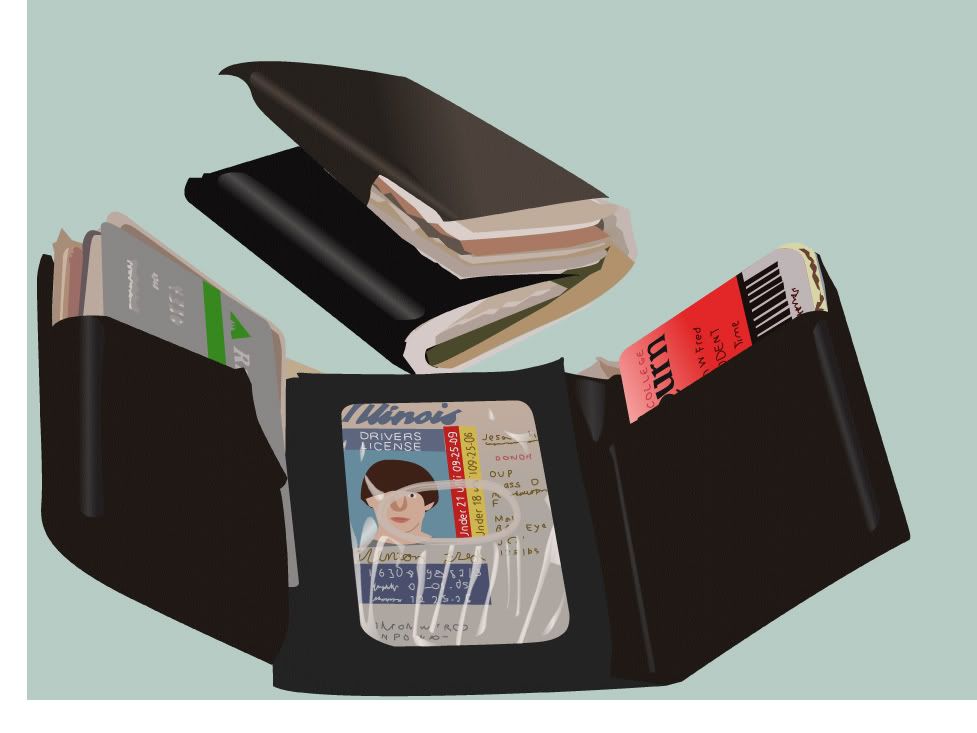
10 THINGS TO NEVER CARRY IN YOUR WALLET!

 
I know it has been awhile since I posted, but my mother had surgery for esophageal cancer, and I have been spending all of my free time with her.  Since the holiday season is just around the corner, with a lot of shopping in most everyone's plans, I decided this was a good time to have a guest writer, who will tell you exactly what NOT to carry in your wallet.

We carry a great risk of becoming victims of identity theft every day, and it all starts in the wallet and purse. Every piece of plastic, every password, and every receipt you put in your wallet or purse could be the very thing thieves use to compromise your finances and steal your identity. The best way to protect yourself and your belongings is to use common sense and not carry the following items:

Your Social Security number is incredibly valuable and it can be detrimental if someone gets access to it. You may use your Social Security number for work documentation and government services, but very rarely will you have to show your Social Security card. If your card gets into the wrong hands, there’s no telling what a person will do with it. Thieves can open a credit card in your name, apply for loans, and much worse. If you can’t memorize this number for the life of you, DO NOT write the numbers on paper and leave it in your wallet or purse. Even if you delete the dashes, a thief can figure out what number this is because all SSN have nine digits. Be smart and leave your Social Security card and number in a safe place with other important documents.

2.   PASSPORT


When traveling abroad, you can’t really get around carrying your passport on you. However, American travelers are advised to pack extra passport photos and a photocopy of their passport information in case it is lost or stolen. These documents and photos should be left in the hotel, preferably in a hotel safe. This will make getting a replacement easier and protect you from other identity theft dangers.

3.  CHECKBOOK


It might be convenient to keep your checkbook on hand, but it can be a big mess if someone gets ahold of it. One look at your checkbook and a thief will have access to your account number, routing number, and possibly your signature. If they’re really sneaky, they might be able to forge your signature and cash a check. Avoid this fiasco by keeping your checkbook at home in a safe place.

4.  PASSWORDS


Passwords, such as PIN numbers, e-mail passwords, and even alarm codes should not be carried around in your wallet or purse. It doesn’t take much for a thief to figure out that four digits could be your PIN number. If you cannot remember important passwords that you need to use on a regular basis, then store them on a protected computer or phone.


Many people carry gift cards and certificates in their wallet because they never know when they’ll end up using them. This might seem convenient, but if your wallet or purse gets stolen, you’ll be kicking yourself for not leaving these gifts at home. Gift cards and certificates are as good as money, and you don’t have to show an ID to use them. Avoid this risk by leaving gift cards and certificates at home until you’ve picked a day to use them.


As wonderful and convenient as USBs are, they can be very problematic if a thief gets ahold of one. Many USBs contain confidential files and personal information that a thief would love to have. Not to mention, all of your hard work and important documents could be lost in an instant if someone snags your purse or wallet.

7.  RECEIPTS


Many people disregard receipts and leave them hanging around or stuffed into a purse or wallet, but these small pieces of paper can be quite telling, especially to a smart thief. Some receipts contain your credit card information and signature, which opens the door for identity theft and forgery. Also, if a thief has access to your address and they can see what you bought on a receipt, they may go as far as to rob your house.


A cell phone without a password is a dangerous thing to carry around. A thief will have full access to your e-mail and other personal information stored in your phone. Placing a password on your phone could deter a thief from taking your phone in the first place and prevent them from accessing any personal information. If your phone does not have a password option, then carry it in a pocket or on your body instead of in a bag.


Carrying all of your credit cards in your wallet can be very risky and quite the hassle if they get stolen. Not only will you have to cancel each and every credit card, but you’ll also have to use cash or write checks while you wait on new credit cards to be sent. To avoid this fiasco, only carry the cards you use on a regular basis and leave the rest at home so you’re not completely S.O.L.


Carrying a lot of cash in your wallet or purse is risky for many obvious reasons. If you get mugged, you’ll be out a lot of money. It’s never a bad idea to keep some cash on you, especially when traveling, but be sure to bring only as much as you need and don’t flash it around for others to see.

I know if you are a mother, you probably carry a purse with you, with everything you could possibly need when you are out with your children. You are prepared for every type of emergency possible. But there are certain documents that you should never carry in your purse, as these items leave you open to identity theft if you ever lost your purse or if your purse was stolen.


Related Posts with Thumbnails